

Vanda falcata (Neofinetia falcata) - fragrant flowers (jasmine)
without flowers - 1.7 inch pot
95,00 lei
Jump to product information


Vanda falcata (Neofinetia falcata) - fragrant flowers (jasmine)
95,00 lei
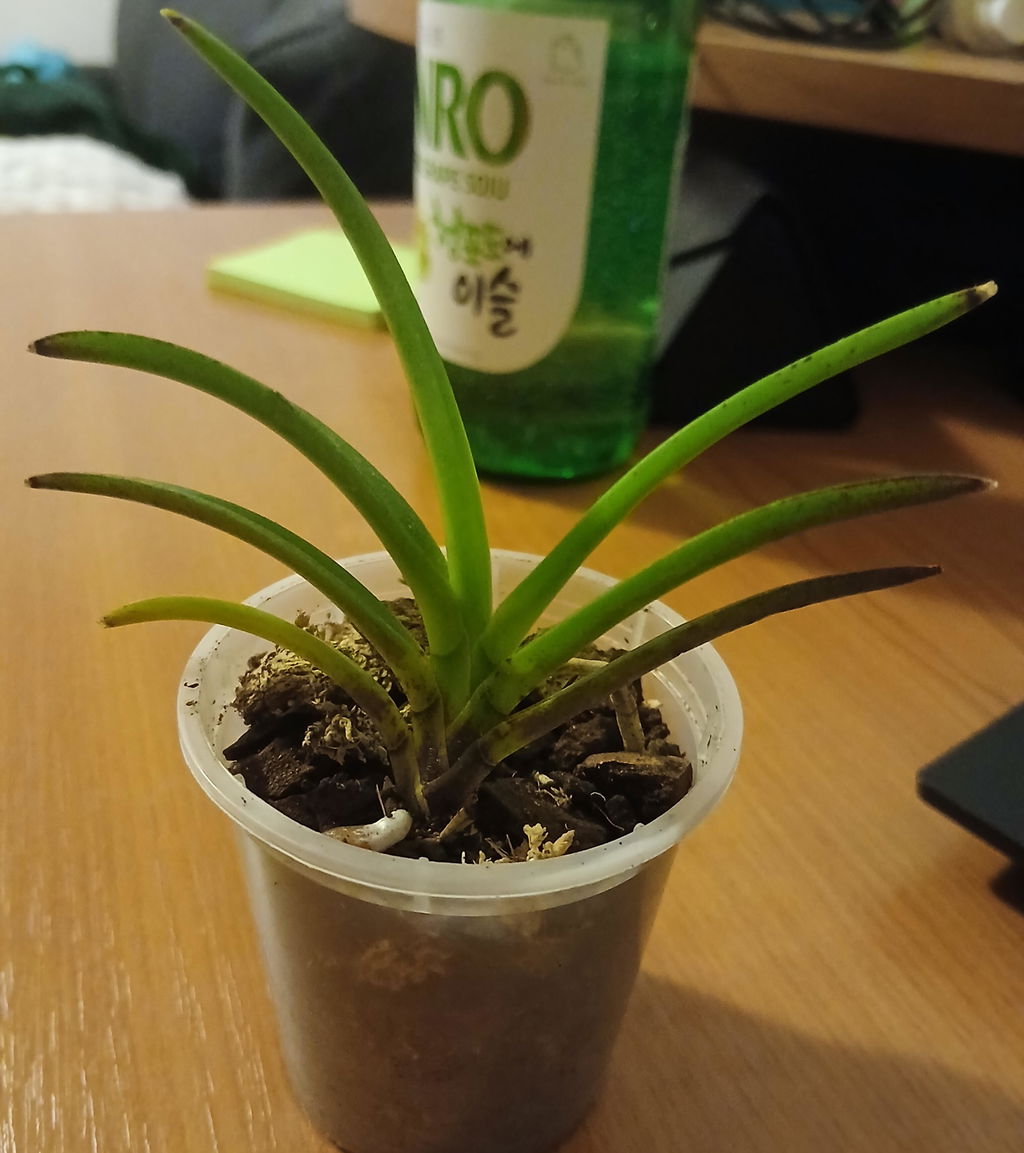
Vanda falcata, known in horticulture as Neofinetia falcata or Fuukiran, is a miniature Vanda native to Japan, Korea, and China. It has narrow, firm leaves that curve slightly like a sickle, slender roots, and white flowers with a long spur. Its delicate, jasmine-like fragrance is more noticeable in the evening and at night.
Fuukiran—the samurai orchid. In Japan, this species has been cultivated for centuries and became famous during the Edo period. Plants are valued not only for their flowers: collectors also look at the shape of the leaves, root tips, spur, sheath color, and the way the plant is arranged in its pot. As a result, there are thousands of selected horticultural varieties, each with its own distinctive details.
A small Vanda with a seasonal growth cycle. Unlike many large greenhouse vandaceous orchids, Vanda falcata tolerates cool nights more easily once acclimatized. In summer, it grows well with bright filtered light, sufficient water, and good ventilation; in winter, it prefers more cautious watering. Do not interpret its cold tolerance as a recommendation to expose it to frost: roots in a pot or damp sphagnum are vulnerable to prolonged cold, cold winds, and freeze-thaw cycles.
Light and watering: place it near a bright window, with gentle morning sun or filtered light. From spring to early autumn, water when the roots have dried slightly, without allowing water to remain at the base of the leaves. When mounted on cork or grown in airy sphagnum moss, it may need frequent watering on hot days. In winter, substantially reduce watering and stop or limit fertilizing, but do not allow the plant to undergo extreme drying for many weeks.
How to grow it: mount it on cork or bark, grow it in a very airy basket, or use the traditional Fuukiran method, with the roots surrounded by a core of airy sphagnum raised above the rim of the pot. Do not compress the sphagnum like a sponge: it must retain air between the roots. Repot in late winter or early spring, and do not remove living roots simply because they are thin or attached to the support.
Flowering: axillary flower spikes may carry several white flowers measuring approximately 3 cm. Flowering usually occurs in summer. After the flowers fade, leave the green spike on the plant; remove it only once it has dried completely.
Size and selection: this is a compact orchid, also suitable for collections with limited space. The plant delivered may vary in size, number of growths, and flowering stage, depending on the batch and season.
For broader information on light, ventilation, fertilizing, and growing systems for vandaceous orchids, read the complete Vanda care guide.
You might also like..
F
Planta a venit cu o radacina rupta dar restul sunt atat de sanatoase încat nici nu conteaza. Plus planta acum iasă din dormancy de la căldura deci dă radacini noi. Recomand oricui îi plac orhideele miniaturale
l
Ottimo venditore