

Magnolia stellata - strongly fragrant flowers
17 cm pot
Sale price
55,00 lei
Regular price
65,00 lei
Skip to product information


Magnolia stellata - strongly fragrant flowers
Sale price
55,00 lei
Regular price
65,00 lei
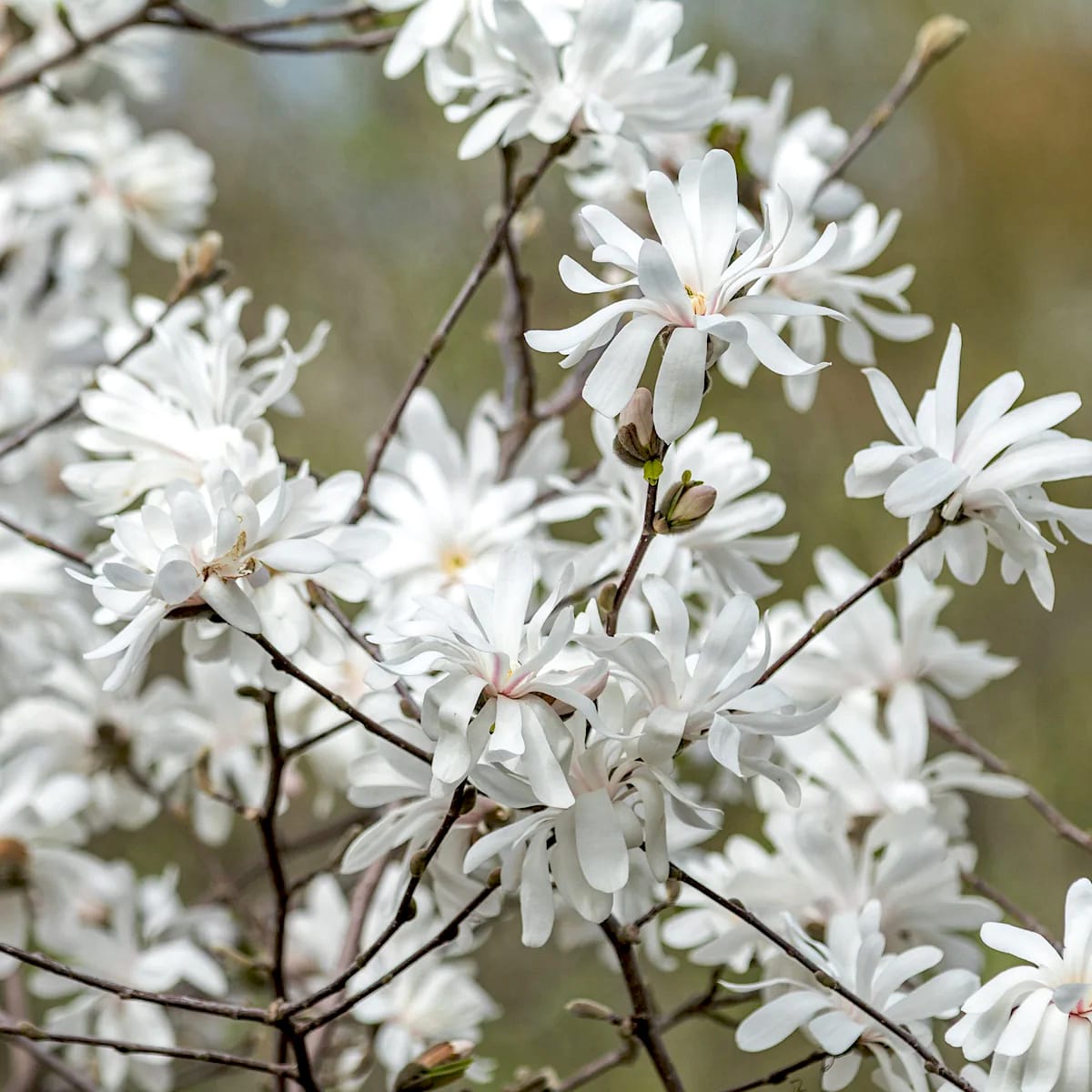
Magnolia stellata, a botanical species also known as "star magnolia," is a compact ornamental shrub from the Magnoliaceae family, native to Japan. Renowned for its white, star-shaped flowers and early spring blooming, this species is a popular choice for small gardens or decorative landscapes due to its moderate size and delicate appearance.
Flower Appearance
- Shape: The flowers are large, star-shaped, with 12-18 thin, elongated petals (tepals), which open wide, creating an airy and elegant effect. The flower diameter is 8-10 cm.
- Color: They are pure white or slightly pale pink at the base, especially in the bud stage, offering a clean and refined look. Some varieties may have petals with subtle pink traces.
- Scent: They emit a floral fragrance with sweet notes, adding charm to the garden.
- Blooming period: Blooms early in spring, in March-April, usually before the leaves appear, providing an impressive floral display for 2-3 weeks. The flowers can be affected by late frosts, browning if temperatures drop suddenly.
Growth Characteristics
- Height: Grows as a compact shrub or small tree, reaching 1.5-3 meters in height and 2-4 meters in width, with a round and dense crown.
- Foliage: The leaves are oval, medium green, 5-10 cm long, with a smooth texture. They fall in autumn, after turning yellow or bronze shades.
- Vigor: Has slow to moderate growth, forming a branched, compact structure that does not become invasive.
Growing Conditions
- Exposure: Prefers full sun or light partial shade, with protection from strong winds that can damage the delicate flowers.
- Soil: Requires fertile, well-drained soil, with a slightly acidic to neutral pH (5.5-7). Loamy or clay soils rich in organic matter are ideal.
- Watering: Needs regular watering, especially in the first years and during dry periods, but does not tolerate waterlogged soil.
- Pruning: Minimal pruning is done after flowering (April-May) to remove dead branches or shape the form. Heavy pruning can reduce future blooming.
Care and Hardiness
- Hardiness: It withstands temperatures down to -25°C to -30°C (USDA zones 4-8), making it suitable for temperate climates, including Romania. However, the flowers are sensitive to late spring frosts, which can affect blooming.
- Fertilizing: A balanced fertilizer applied in spring supports growth and flowering. Avoid excess nitrogen, which favors leaf growth over flowers.
- Pests and diseases: It is resistant to most problems but can be affected by scale insects, aphids, or powdery mildew in humid conditions; good ventilation prevents these issues.
Magnolia stellata is ideal as a solitary plant in small gardens, lawns, or yards due to its compact size. It also fits well in borders, groups, or as a backdrop for shorter perennial plants such as daffodils, tulips, or azaleas. The white flowers combine beautifully with dwarf conifers or plants with colorful foliage. It is also perfect for large containers on terraces if soil and drainage are suitable.
Origin
Magnolia stellata is native to Japan, where it grows naturally in the moist and hilly areas of Honshu island. It was discovered and described by Swedish botanist Carl Thunberg in the 18th century and introduced to Europe and North America in the 19th century. The species is one of the oldest magnolias cultivated ornamentally, valued for its star-shaped flowers and compact size. Magnolia stellata has been widely used in hybridizations, including the creation of Magnolia loebneri (e.g., 'Leonard Messel'). Popular varieties of the species include 'Rosea' (pale pink) and 'Royal Star' (larger white flowers).
Height including pot: approx. 50 cm (varies depending on batch and season)
Branching level varies from one specimen to another.
Promoție valabilă de la data de 01.09.2026, în limita stocului disponibil.