Aucuba japonica 'Crotonifolia' (Variegata, Spotted Laurel, Golden Tree)
13 cm pot
39,00 lei
Skip to product information


Aucuba japonica 'Crotonifolia' (Variegata, Spotted Laurel, Golden Tree)
39,00 lei
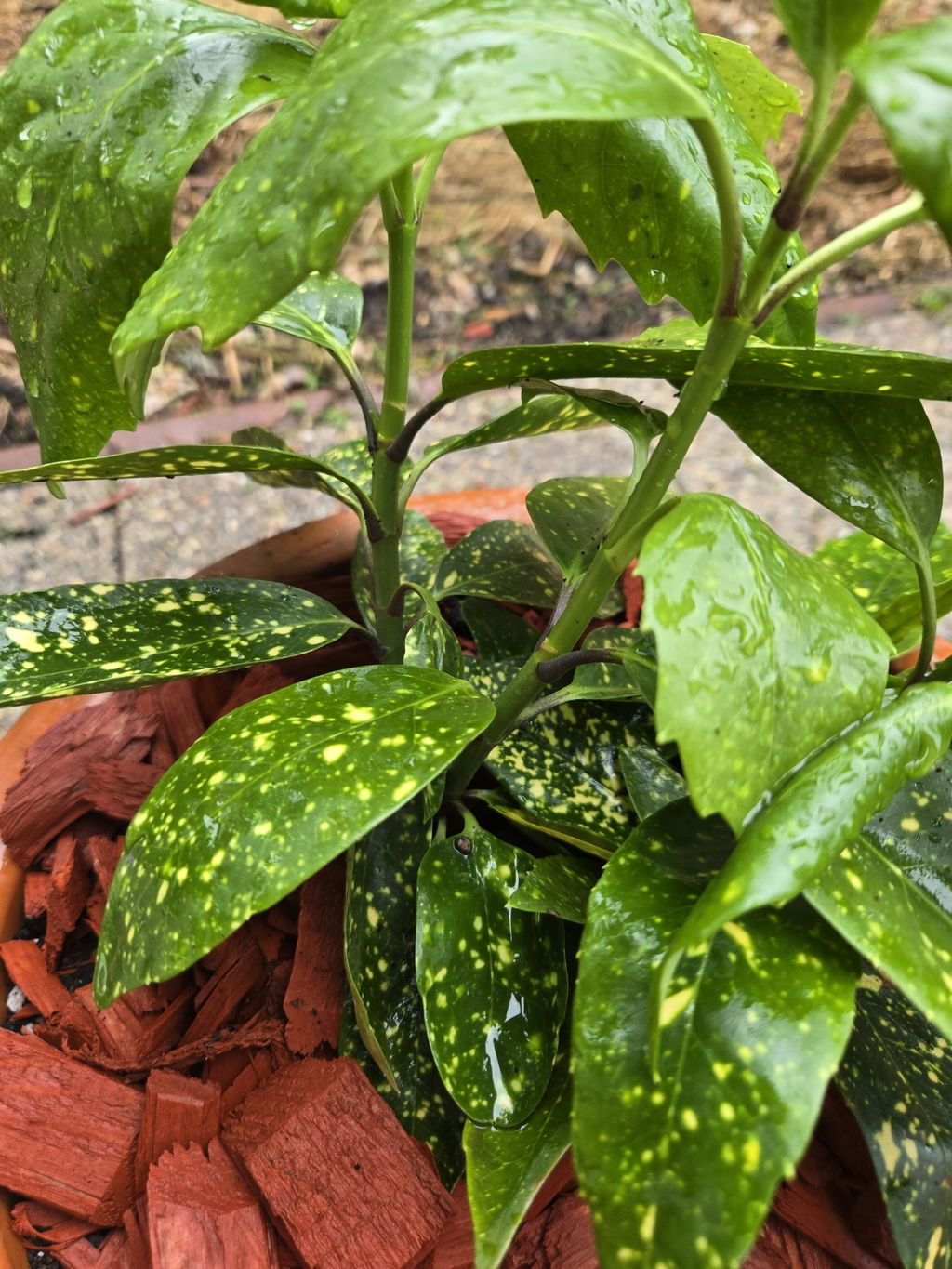
Aucuba japonica 'Crotonifolia', also known as 'Spotted Laurel' or Japanese aucuba, is an evergreen shrub from the Garryaceae family, valued for its variegated foliage and resilience to tough conditions. This cultivar is famous for its glossy green leaves with bright yellow spots that brighten shaded gardens. It is ideal for hedges, borders, containers, or as an accent plant due to its decorative appearance and low maintenance.
Appearance of leaves, flowers, and fruits
- Leaves: The leaves are large, oval, with slightly serrated edges, 10-20 cm long, dark glossy green, sprinkled with yellow-golden spots and speckles. The variegation is irregular, creating a vibrant visual effect similar to croton, hence the name. The foliage remains attractive year-round, illuminating shaded areas.
- Flowers: The flowers are small, purple, grouped in panicles, appearing in spring (March-April) and are inconspicuous, with no significant ornamental value. The plant is dioecious, having separate male and female specimens; male flowers have yellow stamens, and female flowers can produce fruit if pollinated.
- Fruits: On pollinated female plants (in the presence of a male specimen), red, ovoid fruits of 1-2 cm appear, persisting from autumn to spring. The fruits are decorative but toxic if ingested.
Growth characteristics
- Height and width: Reaches 1.5-2.5 m in height and 1.5-2 m in width, forming a dense, rounded shrub. In containers, it remains more compact.
- Vigor: Slow to moderate growth. It is a long-lived and stable plant once acclimated in the garden.
- Type: Evergreen shrub with green, sturdy stems that become woody over time.
Growing conditions
- Exposure: Prefers partial shade or full shade, being one of the few plants that thrives in low light. Tolerates partial sun, but leaves may suffer burns in intense direct sunlight. Ideal for shaded garden areas.
- Soil: Grows in moist, well-drained soils, from clay to sandy, with acidic to alkaline pH (5.5-7.5). Tolerates poor soils but prefers fertile soils enriched with compost.
- Watering: Water regularly during the first year, keeping the soil moist. Once established, it tolerates moderate drought but benefits from occasional watering during dry periods. Avoid waterlogged soils.
- Temperature: Hardy in zones 6-10 (down to -20°C), suitable for temperate climates, including Romania. In severe winters, protect the plant base with mulch, especially in areas exposed to blizzards/strong air currents.
Care and resistance
- Resistance: Very resistant to shade, urban pollution, wind, and poor soils. Tolerates pruning and is resistant to most pests and diseases. May be affected by mites or leaf spots in humid conditions; inspect regularly and treat with organic methods if necessary.
- Fertilization: Apply a balanced fertilizer (e.g., 10-10-10) in spring once a year to stimulate growth. Avoid over-fertilizing, which can reduce variegation.
- Pruning: Prune in spring (March-April) to maintain shape and remove dry or damaged branches. Tolerates heavy pruning for rejuvenation or shaping as a hedge. For fruiting, avoid pruning female plants before flowering.
- Propagation: Propagated by semi-hardwood cuttings in summer or by seeds (if available), but cuttings are faster and more efficient.
- Warning: Leaves and fruits are toxic if ingested, posing a danger to children and animals.
Aucuba japonica 'Crotonifolia' is ideal for shaded gardens, low hedges, borders, containers, or as an accent plant. The variegated foliage brightens dark areas, combining well with hosta, ferns, or heuchera. It is suitable for urban gardens due to pollution tolerance and for modern or traditional landscapes. The red fruits add interest in winter on female plants. It can be used as an indoor plant in bright but cool spaces.
Origin
Aucuba japonica is native to Japan, Korea, and China, where it grows in shaded forests. The 'Crotonifolia' cultivar was selected for its yellow-golden variegation, becoming popular in European and North American horticulture in the 19th century. It is one of the most cultivated aucuba varieties due to its decorative appearance.
Height including pot approx. 30 cm
📌 Note: The plant is delivered in the production plastic pot. Decorative ceramic or clay pots shown in images are not included in the price.
You may also like...
A
O planta foarte frumoasa! Am primit-o de curand si ca toate plantele pe care le-am cumparat de la Secret Garden, este sanatoasa si arata foarte bine.