

Hoya sigillatis - mature specimens
without flowers - 14 cm pot with hanger
€31,95
Jump to product information


Hoya sigillatis - mature specimens
€31,95
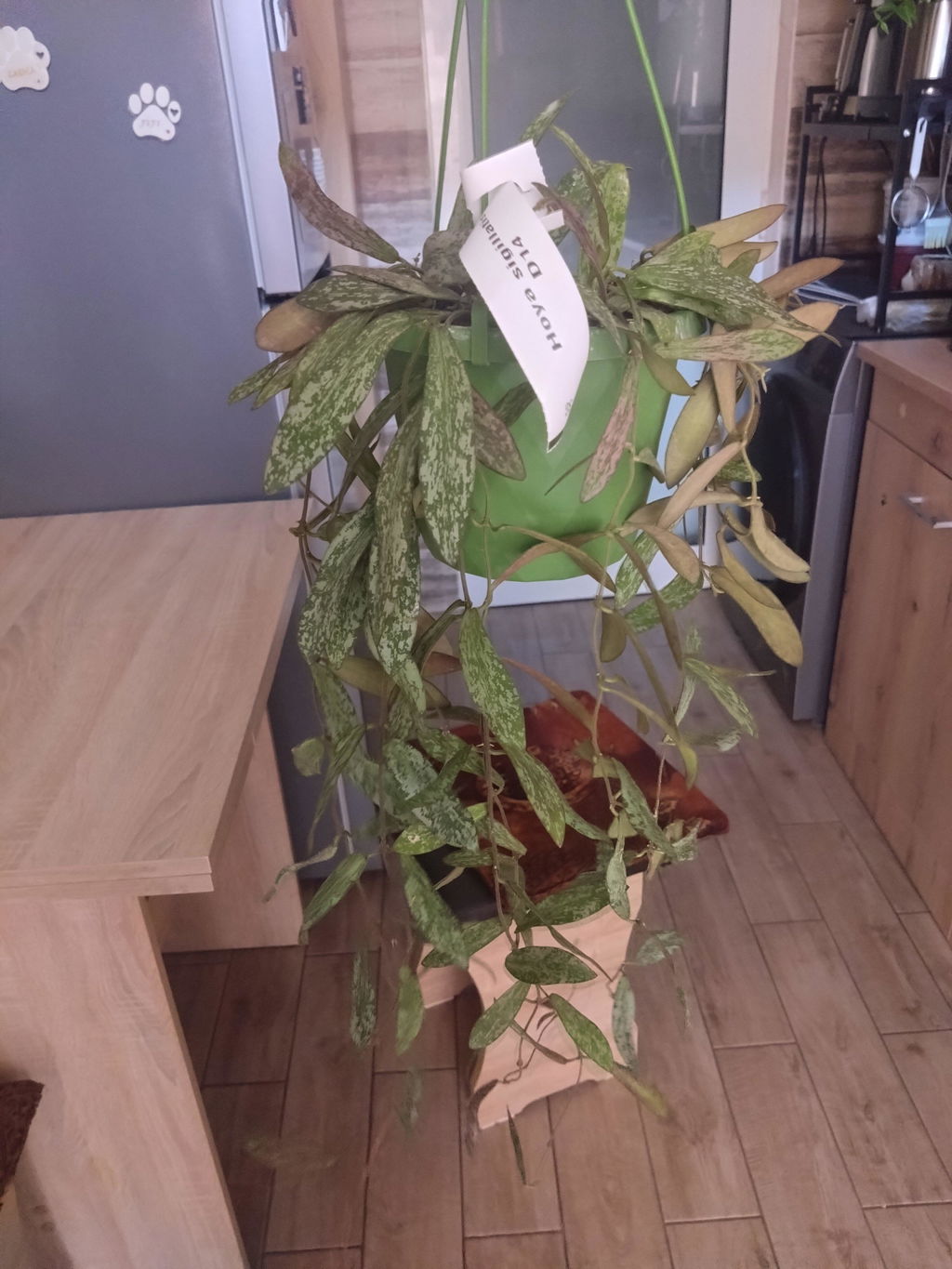
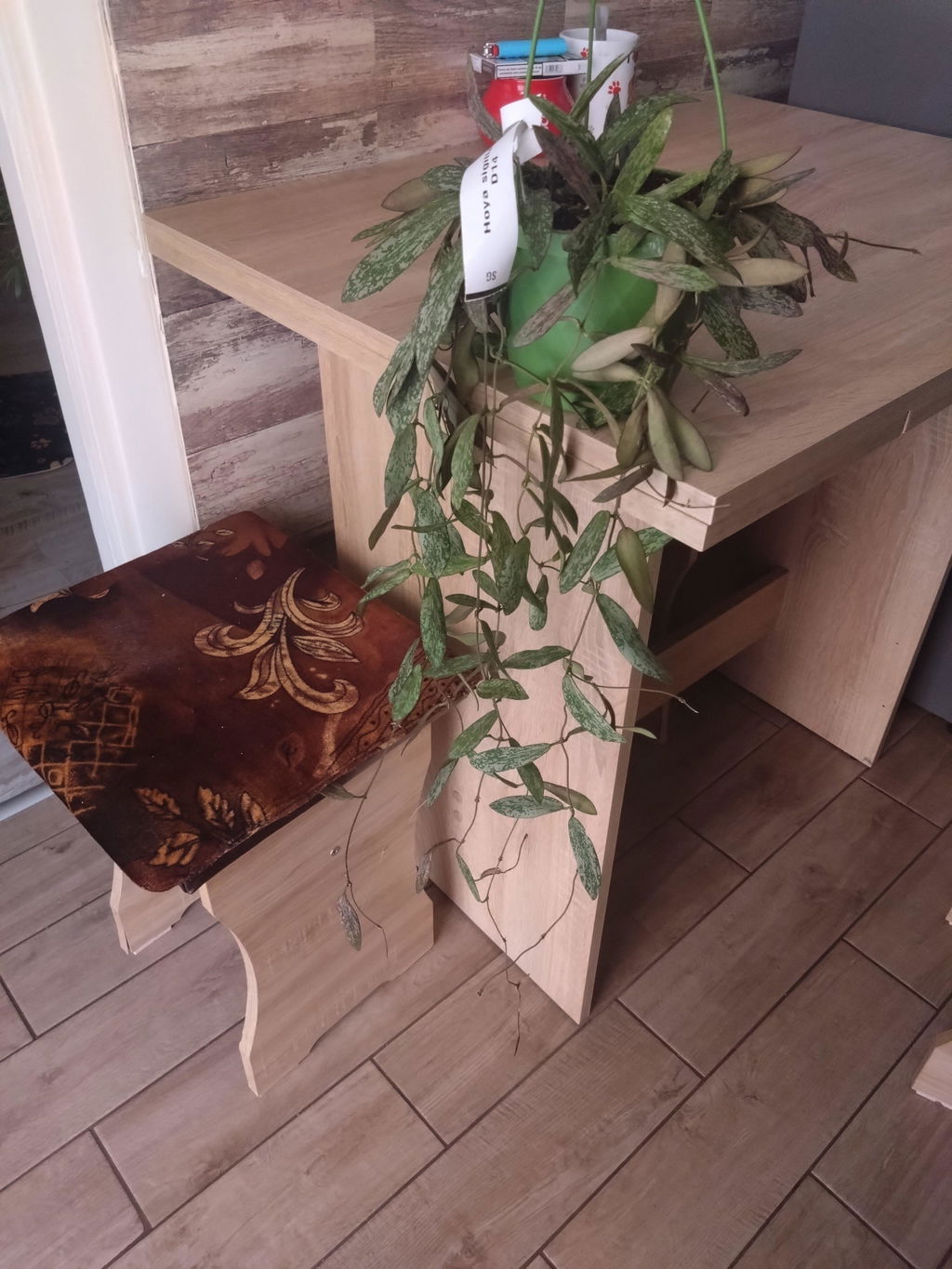
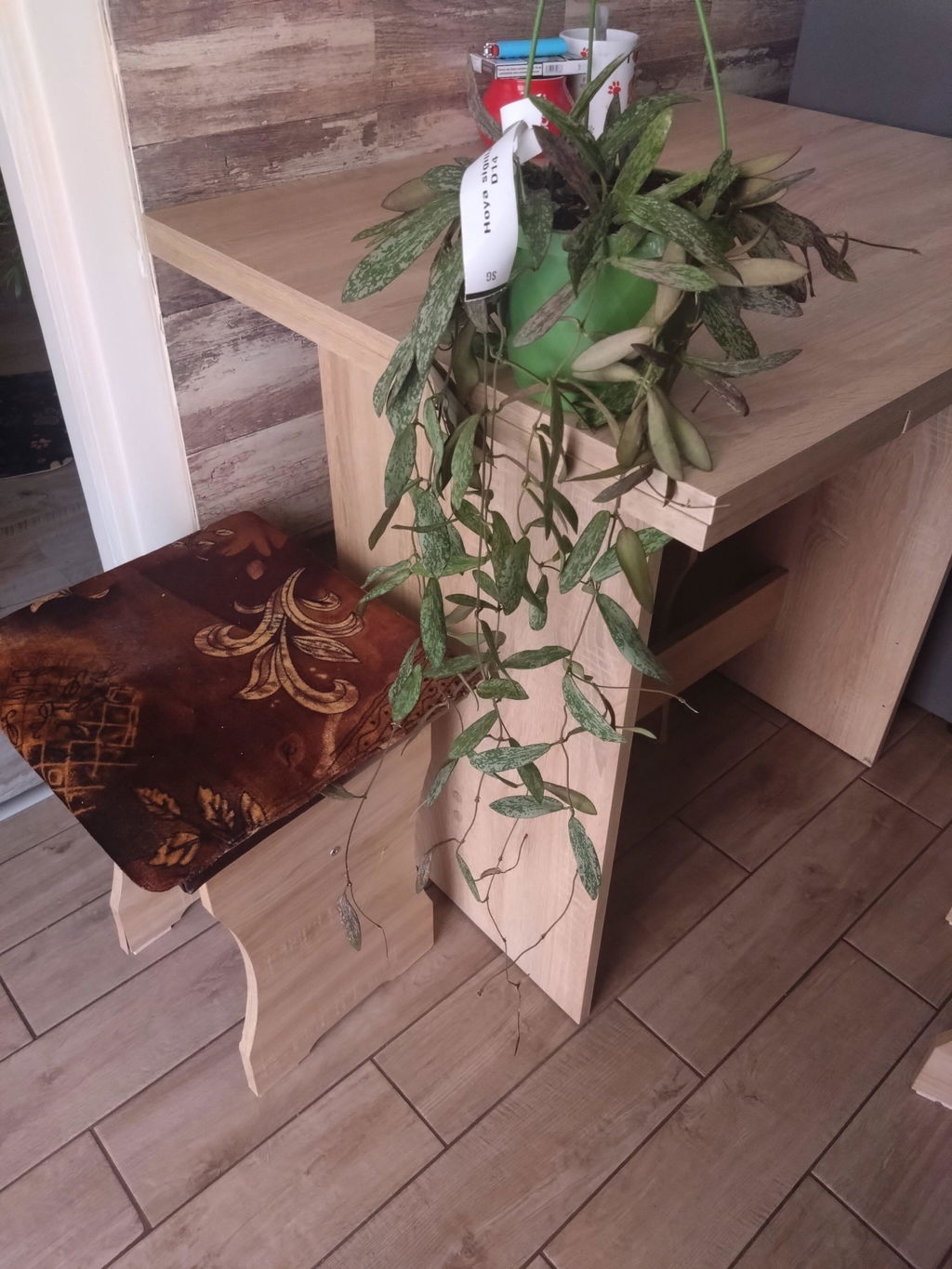
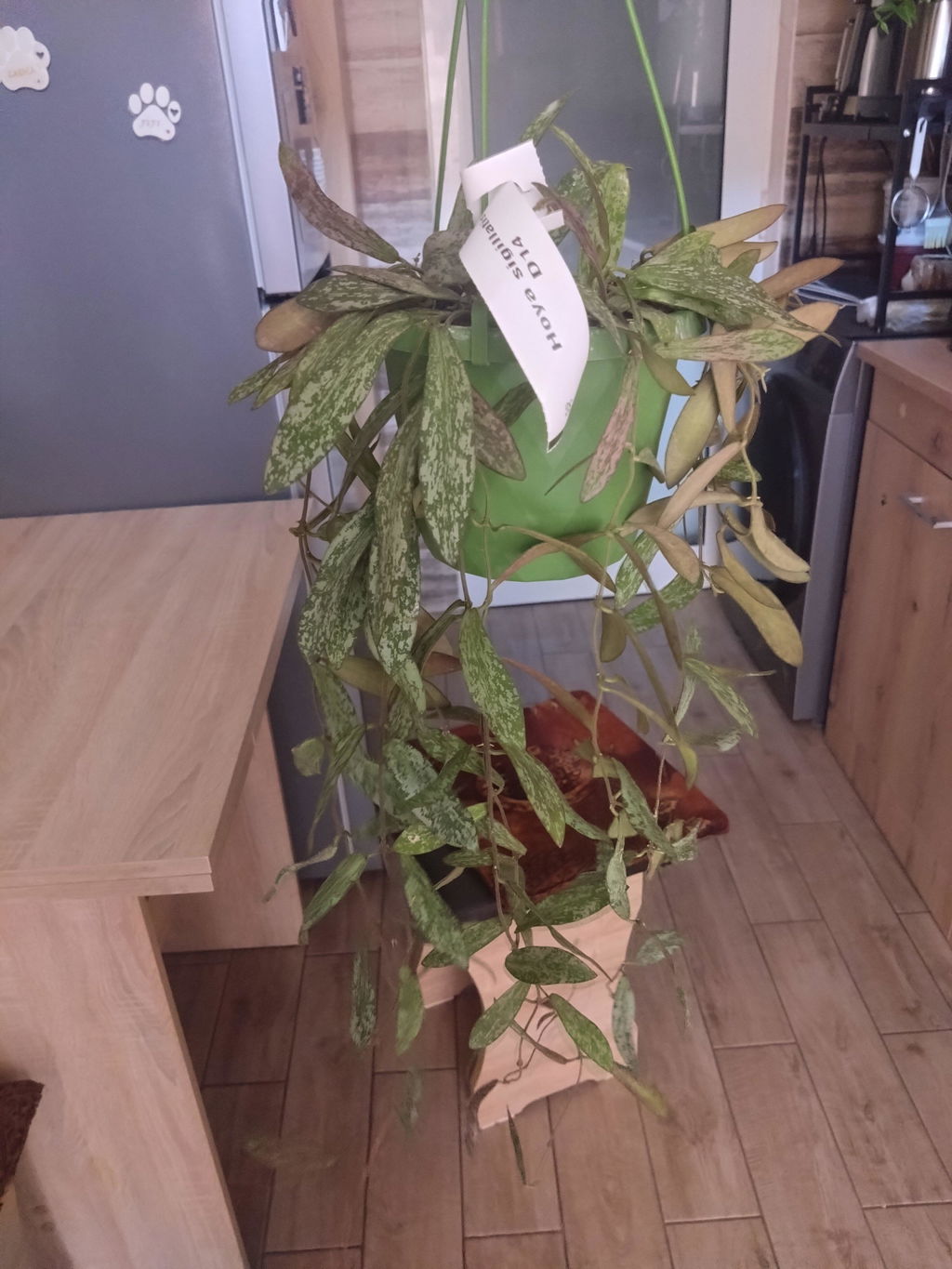
Hoya sigillatis is an accepted species endemic to Sabah, on the island of Borneo, where it grows as an epiphyte or lithophyte. It has a trailing or climbing habit and is mainly grown for its narrow, green foliage, speckled with silver markings that may become more pronounced in good light. This batch includes established plants. Under good growing conditions, it produces umbels of small, reflexed, apricot-orange flowers with a caramel fragrance.
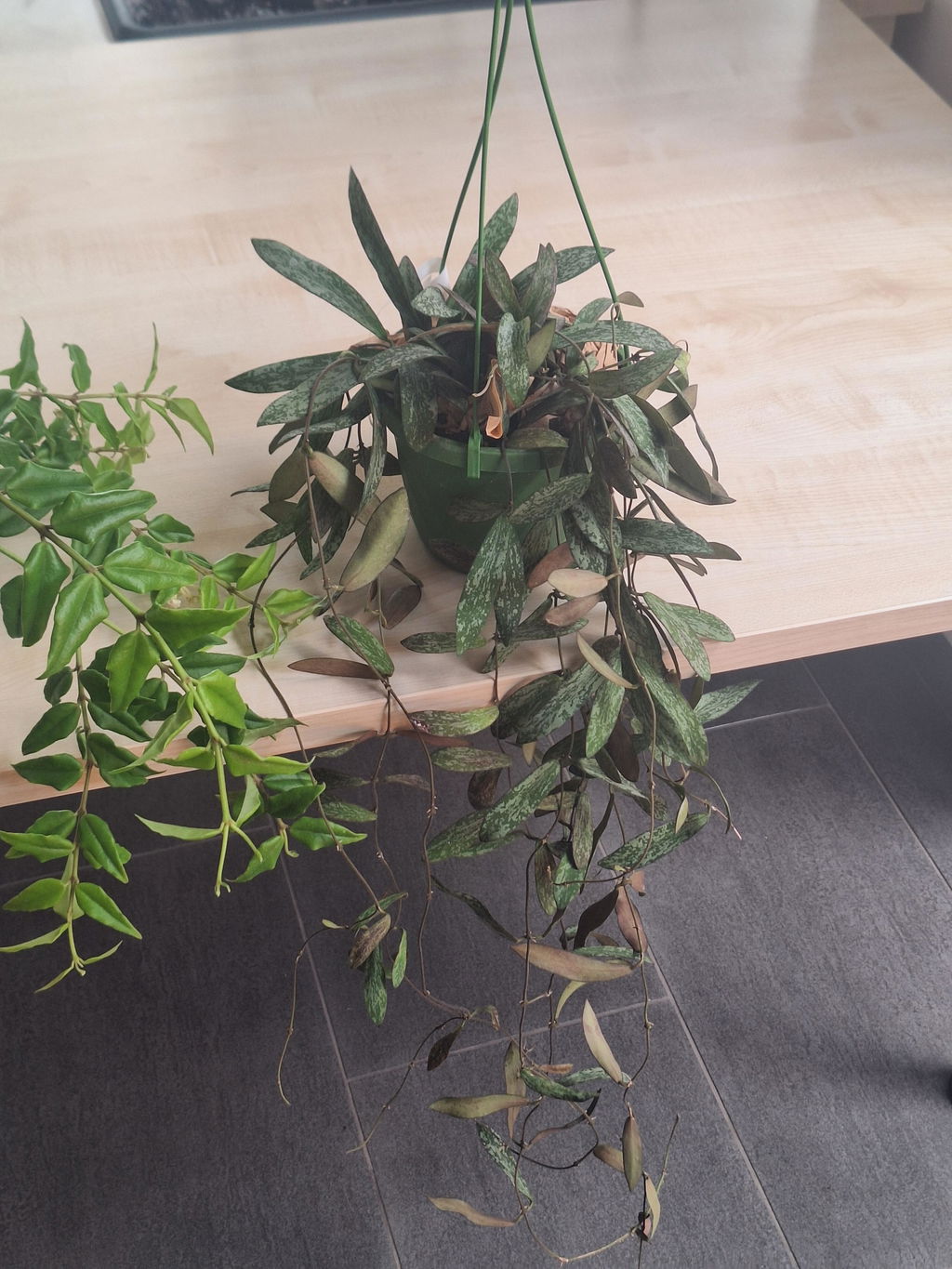
Foliage and splash. The leaves are narrow, elliptic to lanceolate, with a firm texture and numerous grey-silver spots. These markings are described as splash and vary between leaves and specimens; they are not equivalent to cream or white variegation. In brighter light, introduced gradually, the foliage may develop bronze, burgundy, or purple tones. This coloration is a response to light, not a change in identity. Intense sunlight through glass can scorch the leaves.
Flowers and fragrance. Under good growing conditions, the plant may produce umbels with approximately 20–25 small, reflexed flowers. The corolla is apricot-orange, while the corona tends toward yellow. The flowers may last for approximately one week. Growers describe the fragrance as ranging from subtle to clearly perceptible, with caramel notes; its intensity varies.
The plant may react to repeated relocation or sudden temperature changes by losing some leaves or buds. Provide it with a stable position after acclimatization and do not remove the green peduncles, as they may flower again.
Vine length may vary depending on the season, growth rate, and batch.
Substrate: use an airy, well-draining mix suitable for epiphytic species. We recommend the professional substrate for Hoya and Anthurium - SG Mix.
For complete recommendations on light, watering, substrate, fertilization, propagation, and flowering, read the complete Hoya care guide.
You may also like...
T
Un exemplar frumos cu multe liane lungi.
T
Un exemplar frumos cu multe liane lungi.
N
Am primit un exemplar cu liane lungi.
A
Big plant with healthy roots and leafs.