

Hibiscus rosa-sinensis ‘Salsa’ - Japanese roses with large red-orange flowers
13 cm pot - 2 plants/pot
€14,95
Skip to product information


Hibiscus rosa-sinensis ‘Salsa’ - Japanese roses with large red-orange flowers
€14,95
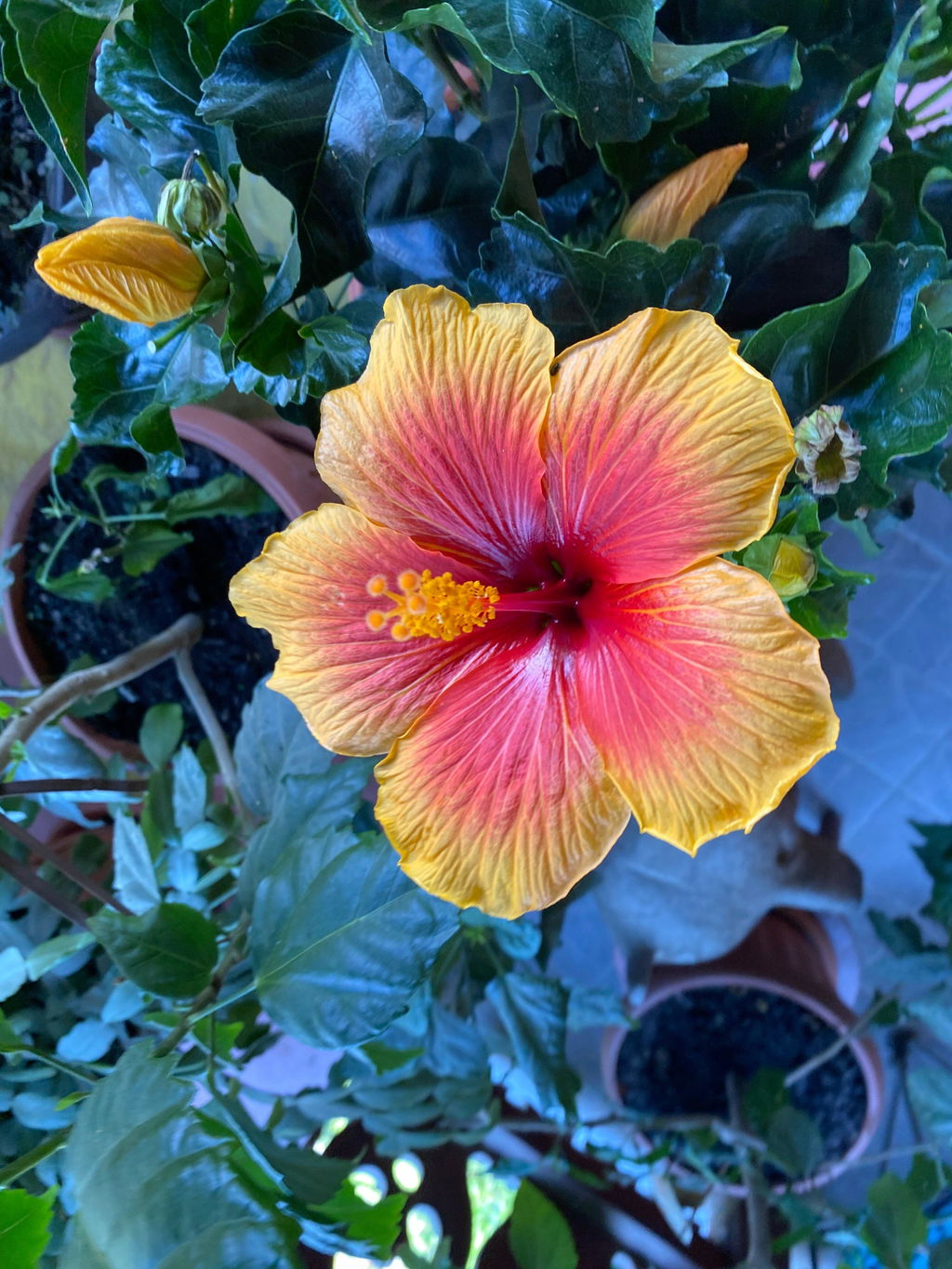
Hibiscus rosa-sinensis ‘Salsa’ is a spectacular tropical variety, known for its large flowers with velvety petals in vivid shades of red and orange, which bring energy and vitality to any space. The contrast between the vibrant flowers and the glossy, dark-green foliage creates an intense decorative effect, ideal for balconies, sunny terraces, or bright interiors.
With a compact habit and abundant flowering throughout the warm season, Hibiscus ‘Salsa’ is the perfect choice for those looking for an exotic, eye-catching plant that is easy to grow in a pot.
🌿 Botanical characteristics:
• Full name: Hibiscus rosa-sinensis ‘Salsa’
• Family: Malvaceae
• Plant type: ornamental shrub, perennial indoors or in warm climates
• Flowers: large (10–15 cm), deep red with orange tones, featuring a delicate texture and contrasting center. Flower size is influenced by growing conditions and plant maturity.
• Foliage: glossy, dark green
• Flowering: May – October
☀️ Growing conditions:
• Light: direct sunlight or bright light – for maximum flowering
• Soil: fertile, well-drained
• Watering: regular – water when the soil is slightly dry on the surface, avoiding excess water
• Temperature: 18–30°C | requires protection below 10°C
• Fertilization: once every 10–14 days during the warm season, using fertilizer for flowering plants
✔️ Benefits and uses:
• Decorative plant with spectacular exotic flowers
• Ideal for terraces, balconies, and bright indoor spaces
• Can be pruned to maintain its compact shape
• Suitable for both tropical plant enthusiasts and beginners
📏 Height including pot: approx. 30–40 cm
📦 Note: The plant is delivered with or without flowers, at the displayed price. The flowers last for a short time (1–2 days), but appear continuously under good conditions.
You may also like...
E
Superbă!
A
Am primit azi hibiscusul Salsa. Arată excepțional. Plin de flori și boboci. Calitate excelentă. Sunteți profesioniști. Vă mulțumesc mult !
L
Foarte frumoasa. Am achizitionat plantuta in urma cu 2 saptamani si am deja 3 flori mari si inca multi boboci. :)
P
Alles super
A
Bin sehr zufrieden mit der Lieferung