

Phalaenopsis tetraspis 'C2' - fragrant flowers
without flowers - 2.5 inch pot
€26,95
Skip to product information


Phalaenopsis tetraspis 'C2' - fragrant flowers
€26,95
Phalaenopsis tetraspis 'C2' is a selection of the species Phalaenopsis tetraspis, endemic to Sumatra, the Andaman Islands, and the Nicobar Islands, where it grows in warm, humid forests from sea level up to approximately 100 m. In recent taxonomy, Phalaenopsis speciosa is often treated as a synonym; both names remain in use commercially. The plant is medium-sized, with leaves up to 30 cm long and 2–5 lateral, arching flower spikes, often with a slightly zigzag appearance. The flowers are waxy, glossy, and strongly fragrant, usually around 4.3 cm across, with natural variation in color and pattern.
Flowering is more frequent in spring but may also occur during other warm seasons.
The 'C2' selection also appears as f. christiana / speciosa in older lists. It often produces numerous spikes; flowering may be sequential, with flowers opening one after another.
It requires moderate to bright, filtered light, approximately 18,000–22,000 lux, with protection from strong sunlight and, ideally, around 12 hours of light per day. Suitable temperatures are around 22–28°C during the day and 18–22°C at night; a 3–4°C difference between day and night helps promote flowering. It does not require a strict dormancy period.
Water when the substrate dries out, then allow the water to drain completely. Do not allow water to remain trapped between the leaves. In a pot, humidity of 55–60% is usually sufficient; when mounted, aim for around ~70%. During active growth, fertilize with a diluted solution (approximately half the recommended dose) after watering, about every third watering, using orchid fertilizer. Use a well-aerated, medium-grade bark. A Phalaenopsis substrate is suitable if it dries at the rate appropriate for your home. Repot after flowering, when new roots appear.
If the plant produces many spikes but few flowers, check the light and fertilization. Bud drop often indicates dry air, a sudden change in location, or damaged roots. Soft roots and a sour smell indicate overwatering.
You may also like...
C
Egészséges szép erős tövet kaptam.
Viszont a virágok színe nem ilyen ha nem sötétebb bordós. Aki ilyen élénk pirosat szeretne az ne vegye meg.Nagyon csalódott vagyok.
Gondolom kompenzáció nincs!!!
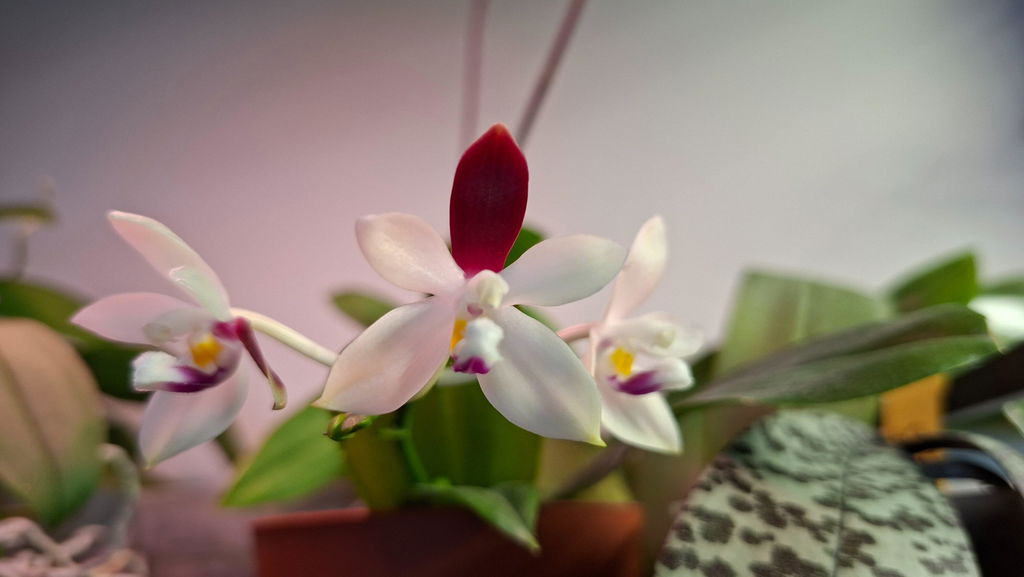
First, you should understand what you are purchasing. This is a plant that makes every flower unique—every spike and every flower will be a surprise. Some may be completely white, some completely red, some spotted, and the intensity of colors will always vary. This is why you can also find multiple pictures even on the product page.
It is a shame that you have left this review without trying to understand the plant that you have purchased.
A
Top
V
Zeer goed
A
Amazing plant!
P
Soddisfatta