

Drosera spatulata – Sundew, a carnivorous plant with compact rosettes
8.5 cm pot
77,00 kr
Skip to product information


Drosera spatulata – Sundew, a carnivorous plant with compact rosettes
77,00 kr
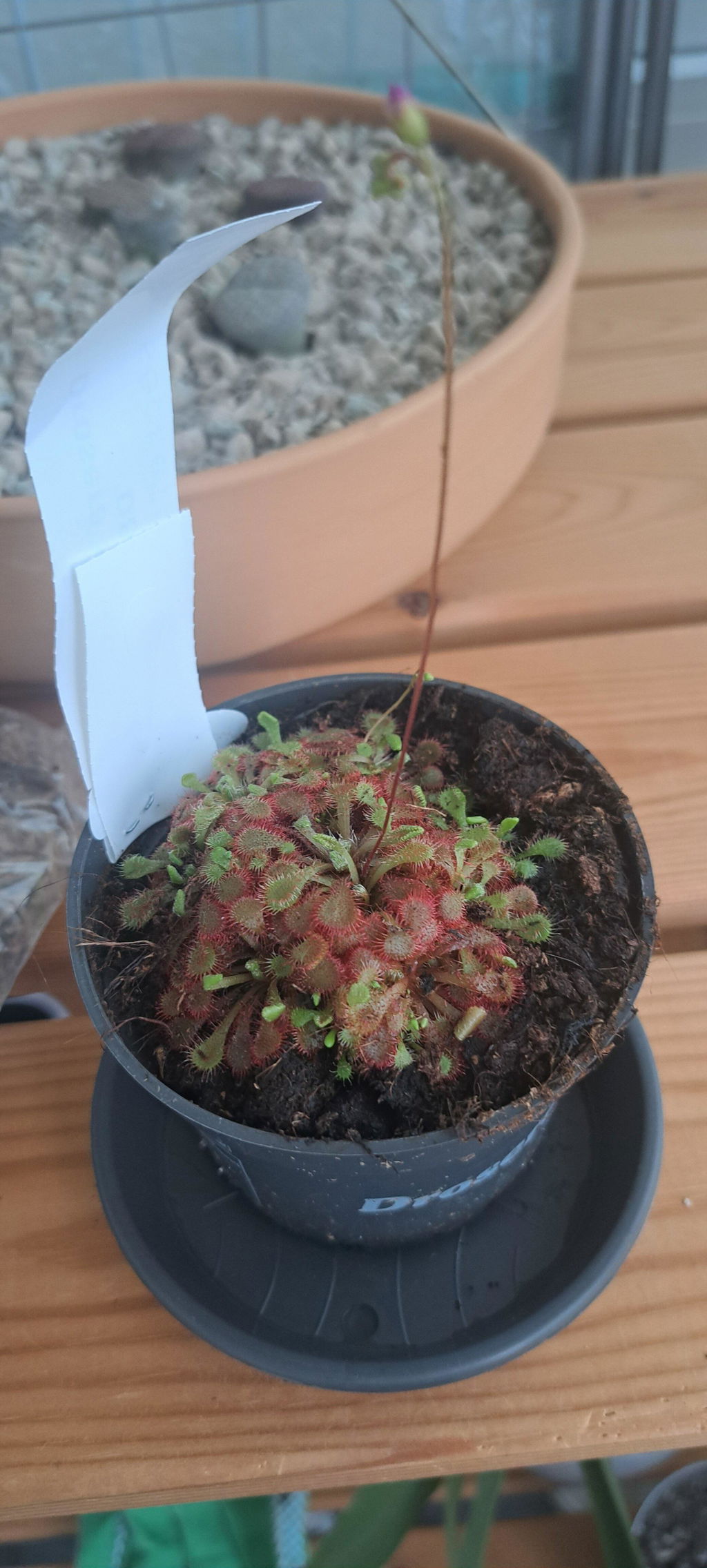
Drosera spatulata is a perennial carnivorous plant in the Droseraceae family, valued for its compact rosettes and leaves covered with numerous glandular tentacles. These produce glistening droplets of mucilage, resembling drops of dew, which attract and trap small insects.
After capturing prey, the leaf glands secrete digestive enzymes, and the plant absorbs the resulting nutrients. This mechanism is an adaptation to nutrient-poor natural habitats.
In good light conditions, the leaves and tentacles may develop reddish or pinkish-red hues. Mature plants can produce slender flower stalks rising above the rosette, with small flowers, usually pink to pale pink.
🌿 Botanical characteristics
- Full name: Drosera spatulata
- Common name: Cape sundew, Spoon-leaved Sundew
- Family: Droseraceae
- Plant type: perennial carnivorous plant
- Compact, rosette-shaped growth
- Spatulate leaves, wider toward the tip
- The leaf surface is covered with glandular tentacles
- The tentacles produce sticky mucilage to capture insects
- Coloration can range from green to reddish green and red, depending on the light and growing conditions
- Produces flower stalks that rise above the rosette
- Small species, suitable for carnivorous plant collections
☀️ Growing and care conditions
- Light: requires plenty of light. Bright light promotes compact growth, mucilage production, and reddish leaf coloration. Introduce direct sunlight gradually for plants that have not previously been acclimatized.
- Watering: the substrate must be kept permanently moist. The tray method is suitable: the pot can be placed in a container with a shallow level of water.
- Water: use rainwater, distilled water, or reverse-osmosis water with a very low mineral content. Hard tap water can cause salt buildup in the substrate.
- Substrate: low in nutrients and without added fertilizers. Do not use universal potting soil or fertilized horticultural substrates.
- Umiditate: apreciaza umiditatea moderata spre ridicata, dar si o buna circulatie a aerului.
- Humidity: It prefers moderate to high humidity, but also good air circulation.
- Temperature: Drosera spatulata is generally cultivated as a tropical/subtropical species and grows well at typical temperatures in a bright indoor setting.
- Fertilization: do not fertilize the substrate with conventional plant fertilizers. The plant obtains a significant portion of its nutrients by capturing insects.
🌱 Feeding: Manual feeding is not necessary if the plant has occasional access to small insects. Do not offer meat or other food intended for human consumption. Recommendation Secret
👉 Garden For Drosera spatulata we recommend Soil for for Plants Carnivorous, a substrate specifically designed for requirements plants carnivorous.
➡️ View the product: Carnivorous Plant Soil
✨ What makes it special
- an authentic carnivorous plant, with an active mechanism for capturing and digesting insects;
- leaves covered with shiny mucilage droplets, creating the characteristic "dew" effect;
- may develop an intense red coloration when provided with sufficient light;
- forms small, compact rosettes;
- produces delicate flower stalks above the foliage;
- Its small size makes it suitable even for collections with limited space.
📌 Note
The amount of mucilage, coloration, and rosette size may vary depending on light, temperature, and growing conditions. The temporary absence of sticky droplets after transport does not necessarily indicate a problem with the plant; handling and changes in environmental conditions may temporarily reduce mucilage production, which can resume after acclimatization.
The plant may be delivered with or without flower stalks, depending on its stage of development. Older leaves dry out naturally, and damaged leaves or tips may appear as a result of handling, transport, or adaptation to new growing conditions. Specimens may vary in size and rosette fullness.
Height including the pot: approx. 8 cm
The ceramic pot is not included in the price.
You may also like...
L
Drosera spatulata a venit în stare bune!Îmi place ca are doua tije de flori și îmi mai place nuanță ei.
G
Super!